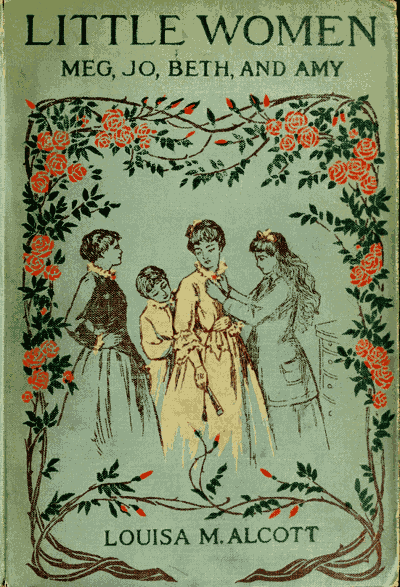
Lately, I have been reading the novel March, by Geraldine Brooks. It is a story written about the father of the March family, who is absent for most of Little Women. I decided a good theme to write about in this post would be the effects of eating with certain people throughout the book. It may seem slightly random for a story about the Civil War, but the way I see it, it's a perfect topic for conversation. Foster named the second chapter of his literature guide book "Nice to Eat With You: Acts of Communion". As he explained, "Breaking bread together is an act of sharing and peace," (Foster 9). Normally, we eat with the people who are close to us, as well the people we are trying to be respectful or neighborly to. It's quite uncommon for two souls who hate each other with a burning passion to share a friendly dinner out of the blue. No, the meals throughout literature really do have their own purposes. Why else would the author go through the trouble of writing those difficult scenes in the first place?
Within March, there are many scenes involving the consumption of food, but all of them are unique in their own ways. The first meal mentioned in the book takes place in a wealthy slave owner's home. Mr. Clement, the slave owner, treats young March to a fine dinner and allows him to stay there for a few weeks. March came there originally to trade books with this man and was treated with respect, and therefore invited to dine with the master of the house. Mr. Clement did not invite many people to dinner, even his son's manager - who was very familiar with the family. Therefore, it was seen as an honor for March to be treated with such respect. Of course, after a while, there was an incident with March trying to teach a young slave to read, and Mr. Clement soon discovered March's anti-slavery beliefs. Long story short, March was no longer allowed to dine with Mr. Clement. In fact, he was kicked off the premises of the Clement household.
Later on in the novel, after a few years have passed, March meets a young women named Margaret Day, otherwise known as Marmee. He instantly feels a connection to her and gets to know her kind, humble self, through dinners with her and her brother - who March had known for a while already. Nothing much happens as he does not see her for a while. Then, while he is staying at a family called the Emersons' home, he is delighted as well as anxious to find that the two daughters of the Emerson family are good friends with Miss Day and had invited her to a very formal dinner with a few other respectful guests. At the dinner, Marmee arrives late, but is pleased to find March at the table and instantly acknowledges them. Even before the food is actually set down on the table however, Mr. Emerson and Marmee have a rather loud quarrel and Miss Day stomps away from the house, leaving March dazed and confused from seeing two very different sides of one women all in the course of a dinner party. Later that night, however, they find each other in the woods and talk about all of the problems of slavery and the terrible people who live in the world. If that dinner party had never happened, March and Marmee would most likely have never gotten to know each other - therefore preventing the existence of the four March daughters, erasing the entire story of Little Women. Quite mind boggling, isn't it?
There are other points throughout the novel with less formal meals. At one point, March goes to a cotton plantation down south to teach the former slaves who work there how to read and write. While they are technically free men and women, their lives are anything but grand. Even on the first day March stays there, he finds a poor old man who has been banished to a hole for feeding one of the farm pigs to his family. March had been given a small ration of bread for his dinner, and he gives it to this man, seeing he is starving. There are other points in the novel as well where either March passes on his own food to others in need, or even when he is in need, and others supply precious food for him. This passing around of food truly shows the meaning of an act of communion - proving that food is shared between those who trust in each other and want to help each other for the sake of life.
As you can see, there are many different forms of meals and acts of communion. Whether it be between two wealthy, respectful business owners, or two starving, impoverished workers, all of these meals have meaning.
Monday, July 28, 2014
Monday, July 21, 2014
AP Lit Post #4: Under the Umbrella
As Foster says - "It's More Than Just Rain or Snow". In his 10th chapter, he talks about the impact of weather on the story at hand. As I was reading Little Women, I noticed I great deal of things implied through specific forms of precipitation. For one thing, the snow. At the beginning of the book, the four sisters are all in their teens and living at home with their mother. It is Christmas time, and the family is poor, so the daughters try to scrape together some warm family memories without the use of money. The snow outside brings with it feelings of poverty and struggle, as the girls must bear their burdens and learn how to live with little luxury. In other parts of the novel, however, the snow carries feelings of fun and laughter, as the girls (and their friend Laurie next door) experience new adventures and fun times, regardless of the frozen world outside.
One of the most vivid representations I found of the impact of weather on the story is in a chapter near the end of the book, called "Under the Umbrella". This scene stands out in my mind as there is never much mention of rain throughout the novel until it comes to pass. There is one little scene where Amy, the youngest daughter, has to run home in the rain with her drawing sketches getting drenched after a rather unpleasant day, but other than that, there is only one scene that deliberately includes rain.
It begins with the second oldest daughter, Jo, is walking into town to shop (although she may have ulterior motives, as her "friend" the professor has business there). Once she gets into town, it starts pouring, and she realizes with regret that she forgot an umbrella. She is tempted to stop by the building where the professor should be to ask for an umbrella, but she thinks better of it and continues walking, regardless of the water pouring down around her. As she is walking, she finds herself under a taller person's umbrella, and looking up, is shocked to see none other than the professor himself. Now, Jo is the one sister who never thought she would find true love as she had never loved anyone like that before. Her hard outer shell made it nearly impossible for any man to find their way into her heart. However, drenched in the rain and standing in the shelter of the professor's umbrella, she comes to realize that she does have a man who she cares for more than just a friend. As the two of them walk towards her house in the pouring rain, the truth spills out that they love each other and want to spend the rest of their lives together. Absorbed in their new-found love, they forget to catch a carriage or bus and simply walk home in the rain, both of them soggy and dirt covered, but happier than ever before.
As this is the only true "rain scene" within the novel, it truly is significant. Jo was the last sister to find what made her happy, and the last loose end was tied up with the rain. The rain within this scene was definitely more than just rain. It created a background that suggested something important was about to happen, as it did. The rain falling around Jo and the professor's umbrella brought about a change in their characters, unveiling the outer shell around Jo and exposing them both for who they were inside. It shed all of the two characters' doubt and denial, giving them inner strength and hope for the future.
Imagine that scene if it had taken place on a sunny day. Would it have been nearly as effective? The answer is no. Think about it. If it hadn't been raining, the professor would not have had an umbrella which gave him clearance to walk Jo around as she shopped and headed home. They may not have even run into each other had it not been raining. It also would have created the question of whether or not the professor truly loved her for her. As he professed his love to her in her dirty, soggy clothes and messy hairdo, the audience knows for a fact that their love is true.
To sum things up, rain is never just rain and snow is never just snow, it all depends on how you look at it. (:
One of the most vivid representations I found of the impact of weather on the story is in a chapter near the end of the book, called "Under the Umbrella". This scene stands out in my mind as there is never much mention of rain throughout the novel until it comes to pass. There is one little scene where Amy, the youngest daughter, has to run home in the rain with her drawing sketches getting drenched after a rather unpleasant day, but other than that, there is only one scene that deliberately includes rain.
It begins with the second oldest daughter, Jo, is walking into town to shop (although she may have ulterior motives, as her "friend" the professor has business there). Once she gets into town, it starts pouring, and she realizes with regret that she forgot an umbrella. She is tempted to stop by the building where the professor should be to ask for an umbrella, but she thinks better of it and continues walking, regardless of the water pouring down around her. As she is walking, she finds herself under a taller person's umbrella, and looking up, is shocked to see none other than the professor himself. Now, Jo is the one sister who never thought she would find true love as she had never loved anyone like that before. Her hard outer shell made it nearly impossible for any man to find their way into her heart. However, drenched in the rain and standing in the shelter of the professor's umbrella, she comes to realize that she does have a man who she cares for more than just a friend. As the two of them walk towards her house in the pouring rain, the truth spills out that they love each other and want to spend the rest of their lives together. Absorbed in their new-found love, they forget to catch a carriage or bus and simply walk home in the rain, both of them soggy and dirt covered, but happier than ever before.
As this is the only true "rain scene" within the novel, it truly is significant. Jo was the last sister to find what made her happy, and the last loose end was tied up with the rain. The rain within this scene was definitely more than just rain. It created a background that suggested something important was about to happen, as it did. The rain falling around Jo and the professor's umbrella brought about a change in their characters, unveiling the outer shell around Jo and exposing them both for who they were inside. It shed all of the two characters' doubt and denial, giving them inner strength and hope for the future.
Imagine that scene if it had taken place on a sunny day. Would it have been nearly as effective? The answer is no. Think about it. If it hadn't been raining, the professor would not have had an umbrella which gave him clearance to walk Jo around as she shopped and headed home. They may not have even run into each other had it not been raining. It also would have created the question of whether or not the professor truly loved her for her. As he professed his love to her in her dirty, soggy clothes and messy hairdo, the audience knows for a fact that their love is true.
To sum things up, rain is never just rain and snow is never just snow, it all depends on how you look at it. (:
Sunday, July 20, 2014
AP Lit Post #3: The Seasons of Little Women
I just finished reading Little Women by Louisa May Alcott. I really enjoyed it! The tale of four sisters was both touching and entertaining, a perfect balance of the trial and joys one faces throughout life. The story of Meg, Jo, Beth, and Amy - as well as everyone in between - is one I am pleased to say I shall never forget.
Thomas Foster dedicates the 20th chapter in his book to the meaning and impact of specific seasons. One of the most significant connections I made between Foster's words and Alcott's was just that - the idea of seasons playing a great role in the story. The entire plot of Little Women ties in with the changes throughout time, and what is a great way to show the shifting of that time? The passing of different seasons. They also connect events that take place in the book to specific emotions. As Foster wrote, "Happiness and dissatisfaction have their seasons..., Summer is passion and love; winter, anger and hatred" (Foster 94). At one point in the story, Beth, the more feeble sister who is beloved by all, catches scarlet fever. She gets incredibly sick, and ends up coming to the brink of death. This happens in the heart of winter. By already suggesting struggle and poverty, coldness and fear in the freezing weather, Alcott creates an ominous feel to that part of the book, adding greatly to the overall effect of Beth's illness on the audience.
It works both ways. At the end of the novel, the characters all come together for "Harvest Time" to pick fruit within an apple orchard. The families they have built up and the friendships they have deepened come together in order to rejoice for lives well-lived. There is laughter, smiles, music, and even tears of joy throughout the reunion. Foster explains, "So harvest, and not only of apples, is one element of autumn. When our writers speak of harvests, we know it can refer not only to agricultural but also to personal harvests, the results of our endeavors, whether over the course of a growing season or a life" (Foster 95). Therefore, summer and autumn are used to boost the feeling of happiness and joy for the characters, just as spring is a time of renewal. Throughout the book, many events that spark change take place during spring, directly after the cold snows of winter melt away, paving a way for growth and new opportunities. And as you can see, all four seasons have a certain impact on the story. Winter - death, worry, sadness, fear. Spring - renewal, change. Summer - happiness, joy. Autumn - the harvest, rejoicing over life.
Once one understands the impact of seasons on a plot line, it's easier to understand the overall effect an author intends to make in a work of literature. Most events written into novels were put there for a reason, in a certain spot of time that would make the point the most effective. Writing is perplexing that way, don't you think? :)
Thomas Foster dedicates the 20th chapter in his book to the meaning and impact of specific seasons. One of the most significant connections I made between Foster's words and Alcott's was just that - the idea of seasons playing a great role in the story. The entire plot of Little Women ties in with the changes throughout time, and what is a great way to show the shifting of that time? The passing of different seasons. They also connect events that take place in the book to specific emotions. As Foster wrote, "Happiness and dissatisfaction have their seasons..., Summer is passion and love; winter, anger and hatred" (Foster 94). At one point in the story, Beth, the more feeble sister who is beloved by all, catches scarlet fever. She gets incredibly sick, and ends up coming to the brink of death. This happens in the heart of winter. By already suggesting struggle and poverty, coldness and fear in the freezing weather, Alcott creates an ominous feel to that part of the book, adding greatly to the overall effect of Beth's illness on the audience.
It works both ways. At the end of the novel, the characters all come together for "Harvest Time" to pick fruit within an apple orchard. The families they have built up and the friendships they have deepened come together in order to rejoice for lives well-lived. There is laughter, smiles, music, and even tears of joy throughout the reunion. Foster explains, "So harvest, and not only of apples, is one element of autumn. When our writers speak of harvests, we know it can refer not only to agricultural but also to personal harvests, the results of our endeavors, whether over the course of a growing season or a life" (Foster 95). Therefore, summer and autumn are used to boost the feeling of happiness and joy for the characters, just as spring is a time of renewal. Throughout the book, many events that spark change take place during spring, directly after the cold snows of winter melt away, paving a way for growth and new opportunities. And as you can see, all four seasons have a certain impact on the story. Winter - death, worry, sadness, fear. Spring - renewal, change. Summer - happiness, joy. Autumn - the harvest, rejoicing over life.
Once one understands the impact of seasons on a plot line, it's easier to understand the overall effect an author intends to make in a work of literature. Most events written into novels were put there for a reason, in a certain spot of time that would make the point the most effective. Writing is perplexing that way, don't you think? :)
Monday, July 7, 2014
"If It's Square, It's a Sonnet" - Do Not Stand at my Grave and Weep - AP Lit Post #2
In all honesty, I've never been a big fan of sonnets. Many of them seem to be written in roundabout ways and my brain just can't handle decoding them. So, obviously, this was a pretty difficult assignment for me. However, I did find one sonnet that caught my attention. It's called "Do Not Stand at my Grave and Weep". So, here it is!
Do Not Stand at my Grave and Weep
by Mary Elizabeth Frye
Do not stand at my grave and weep:
I am not there; I do not sleep.
I am a thousand winds that blow,
I am the diamond glints on snow,
I am the sun on ripened grain,
I am the gentle autumn rain.
When you awaken in the morning’s hush
I am the swift uplifting rush
Of quiet birds in circling flight.
I am the soft starshine at night.
Do not stand at my grave and cry:
I am not there; I did not die.
What pulled me into this sonnet was the beautiful flow of phrase upon phrase, as well as the overall message of the poem. Personally, I haven't experienced many deaths in my life. I did lose my grandparents a while back, but two of them had already passed away before I was even born, and the other two both suffered from altzheimers disease and dementia so I never really got to know them. So I never really cried at their funerals or graves. It would be a lot different though if I had gotten to know them better. Take my pets. I've had time to get to know them my entire life, and I have experienced those deaths - of which I wept, a lot. In fact, I cry my eyes out whenever I lose a pet that is close to me. Therefore, I can't even imagine what it would be like to lose a human being who was that close to me - like a family member or a friend. I'm guessing that my reaction would include bawling my eyes out. It's something that I don't even want to think about. Therefore, when I read this sonnet, I was moved. The words in this poem cry out in vain, begging the reader to not cry when they lose someone precious, but look at all of the accomplishments they fulfilled throughout their life. Although their life has ended, their spirit has lived on in the memories of those they touched. Every person you meet leaves a mark on you, and your mark is left on them in return - it's just how life works. We change each other. Part of what makes us who we are is the people around us. If one of them suddenly disappeared, we would feel a hole in our life, like a piece of us was missing. Still, their imprint on our own lives remains with us, and they are never forgotten. I believe this sonnet was trying to convey that truth - that we should be celebrating a life, not simply mourning a loss.
I also liked the structure of this sonnet. It had a very distinct rhythm that kept the words moving in a cascading pattern. By having every two phrases rhyme with each other, Frye stitched together a stream of metaphors for one who has passed away. The fist half of the sonnet described in detail just who the person in question is and what they have become in a very metaphoric way. The second half continues on with that description and leads into a quiet transition that takes the reader to the final statement - showing them that the victim is dead and gone, but their spirit is still shining strong. I really loved the flow of the sonnet itself - the imagery mixed with the powerful rhythm gave off a feeling of strength, as well as joy, rather than allowing sorrow to creep into the words. The powerful descriptions within the poem shaped it into a beautiful piece of work with a reflective message to hold it all together. So there you have it - my chosen sonnet - "Do Not Stand at my Grave and Weep".
Note: I realize that I wrote this post with the belief that the poem above had 14 lines. As it turns out, it only has 12, and therefore is not a true sonnet, but has other qualities that a true sonnet would have. Namely, as I said before, the poem has two parts - both take up about six lines ("The first half of the sonnet described in detail just who the person in question is and what they have become in a very metaphoric way. The second half continues on with that description and leads into a quiet transition that takes the reader to the final statement"). Also, as Foster explained how most sonnets are written in iambic pentameter, all of the lines in "Do Not Stand at my Grave and Weep" are fairly close to ten syllables. Not to mention, the rhyming pattern is very noticeable. Foster also explains that not all sonnets will follow the exact same structure - it all depends on the type of sonnet. :)
Friday, June 13, 2014
My Favorite Things - AP Literature Post #1
Let me just say, deciding what my favorite books are is one of the hardest tasks anyone could ask me to perform. I love to read. In all honesty, sometimes all I want to do is forget about everything going on in the world, sit on a couch and read all day long. There are so many good books out there, that it's truly difficult picking a small group of favorites. After a LOT of thought, however, I finally came up with a pretty decent list of my very top choices. So, here are my top ten favorite books of all-time:
- The Entire Percy Jackson & The Olympians Series (Sorry - I couldn't choose just one)
- Heir to Sevenwaters
- Divergent
- The Mark of Athena
- Flame of Sevenwaters
- Harry Potter and The Deathly Hallows
- The Hunger Games
- Valley of Fear
- Ender's Game
- Peter and the Starcatchers
This list was so hard to create. I had to leave so many amazing books off the list to keep it a decent size. As you can see, I am a fantasy person. I love adventure stories and all of that stuff. Other genres interest me as well, but fantasy is my all-time favorite. I am very intrigued by anything considered creative writing - poetry, short stories, fantasy novels - I love to read them. Now to explain a bit about why I chose these specific books over the others. For one thing, I loved all of their plots. All of them had a good base plot line - one that fit and made sense with the context. Some of them had surprises along the way as well that I wasn't expecting at all. Whether those surprises were good or utterly tragic (the Hunger Games trilogy comes to mind...), they aided the plot lines along the way and added a whole new element to the story in question.
Along with the amazing plots, these books have amazing character development within them. The characters created by the authors all have distinct personalities and habits, and they truly keep the audience reading. From a girl leaving her home faction just trying to find her place in society to an extremely intelligent little boy who carries the weight of the world on his shoulders, the characters all have true bravery and a good knack for distinguishing the difference between right and wrong. In all of these books, the main characters are pushed into the worst situations imaginable, yet they always fight for what they believe in, even if it means giving up something important along the way.
I also appreciate the way all of them are written. All of their authors' writing styles appealed to me, which I find hard in some other types of books. The writing flowed smoothly and guided the stories to their full potentials. I hate it when I am reading an amazing book but the writing style is terrible. That can make the story seem too slow or just plain confusing.
While AP Lang taught me the value in works of nonfiction (which I had not opened up to until last year), I still can't help but return to the fiction that I have come to love so much. I guess you could call it my "comfort genre". It allows me to take a break from actual worldly problems and analyzing the text (not that that's a bad thing) and just sit down, relax, and enjoy what I am reading, getting lost in the pages of a priceless piece of fiction.
Well, I guess that's it for my rant about fantasy books. AP Language was very interesting and I am glad that it taught me to think in a different way. I now look forward to AP Literature and the books we will read within this coming school year. I can't wait to see what we will learn next! :)
I also appreciate the way all of them are written. All of their authors' writing styles appealed to me, which I find hard in some other types of books. The writing flowed smoothly and guided the stories to their full potentials. I hate it when I am reading an amazing book but the writing style is terrible. That can make the story seem too slow or just plain confusing.
While AP Lang taught me the value in works of nonfiction (which I had not opened up to until last year), I still can't help but return to the fiction that I have come to love so much. I guess you could call it my "comfort genre". It allows me to take a break from actual worldly problems and analyzing the text (not that that's a bad thing) and just sit down, relax, and enjoy what I am reading, getting lost in the pages of a priceless piece of fiction.
Well, I guess that's it for my rant about fantasy books. AP Language was very interesting and I am glad that it taught me to think in a different way. I now look forward to AP Literature and the books we will read within this coming school year. I can't wait to see what we will learn next! :)
Thursday, May 1, 2014
Future AP Lang Advice (TA Post)
AP Lang is not impossible, but there are things I would have done differently if I could retake the class. I wish that I could go back in time to the fall and give myself some advice that would help me a whole lot in the future, but I can't. So this is for the future AP Lang students who will be able to benefit from my advice.
First off: Vocabulary. Do not, under any circumstances, take AP Lang vocab lightly. Sure, previous english classes had ten words a week every week that you learned and took a small quiz on. By the end of the year, you usually forgot some, if not most of them. Well, in AP Lang, vocab is important. Without it, how would you know how to analyze the rhetorical devices in a piece of writing or apply those devices to your own writing? Therefore, if I could go back, I would have done something to record every new word or device that we learned in order to keep them all in an organized, easy-to-follow list that could take me through the year easily.
Secondly: Stay on task. If for one moment you don't know what is going on, ask another student or teacher. If you don't learn the basics of the rhetorical thinking process, it will be hard to get back into the flow of things. Keep up with the reading homework and NEVER put it off until the last moment. For all you know, two chapters that you are assigned to read could end up taking hours upon hours to read (especially if you're a slow reader like myself).
Thirdly: Break old habits. This is a tough one for me. Once I'm used to writing in a certain way, it's hard for me to switch to another form of writing. However, in AP Lang, you have to let go of some of the things that were pounded into your minds for years (such as 5-paragraph essay formatting) and open up a path for new, rhetorical ideas and strategies to flow into your writing. Even though it may take some time, I promise that it is, indeed possible to break some of the worst writing habits with time.
AP Lang truly guides you to think in a different way. When I first heard this, I was pretty confused at what it meant. Now that I have taken a year of the class, I finally understand. Once you take this course, you start to analyze writing in a way that you didn't really do before. It's different, but very helpful in forming effective statements and building on them to form solid arguments that truly call on your reader's attention. Well, good luck, future AP Lang students! I hope this post is somewhat helpful to your life! (:
First off: Vocabulary. Do not, under any circumstances, take AP Lang vocab lightly. Sure, previous english classes had ten words a week every week that you learned and took a small quiz on. By the end of the year, you usually forgot some, if not most of them. Well, in AP Lang, vocab is important. Without it, how would you know how to analyze the rhetorical devices in a piece of writing or apply those devices to your own writing? Therefore, if I could go back, I would have done something to record every new word or device that we learned in order to keep them all in an organized, easy-to-follow list that could take me through the year easily.
Secondly: Stay on task. If for one moment you don't know what is going on, ask another student or teacher. If you don't learn the basics of the rhetorical thinking process, it will be hard to get back into the flow of things. Keep up with the reading homework and NEVER put it off until the last moment. For all you know, two chapters that you are assigned to read could end up taking hours upon hours to read (especially if you're a slow reader like myself).
Thirdly: Break old habits. This is a tough one for me. Once I'm used to writing in a certain way, it's hard for me to switch to another form of writing. However, in AP Lang, you have to let go of some of the things that were pounded into your minds for years (such as 5-paragraph essay formatting) and open up a path for new, rhetorical ideas and strategies to flow into your writing. Even though it may take some time, I promise that it is, indeed possible to break some of the worst writing habits with time.
AP Lang truly guides you to think in a different way. When I first heard this, I was pretty confused at what it meant. Now that I have taken a year of the class, I finally understand. Once you take this course, you start to analyze writing in a way that you didn't really do before. It's different, but very helpful in forming effective statements and building on them to form solid arguments that truly call on your reader's attention. Well, good luck, future AP Lang students! I hope this post is somewhat helpful to your life! (:
Exam Preparation (TA Post)
Exams are quite a climax for the year. All of our studying and homework struggles lead up to one ending point that determines everything for the year. I have to say, I have never been good at studying for hours on end. I am someone who gets distracted the moment I take my eyes off of the paper. The most studying I have ever done in an exam was in 9th grade in World History. I was so nervous for the exam (I'll admit, history is NOT my best subject) that I read the entire contents of my history folder. It literally took me more than three hours. The good news is, I got almost a perfect score on the exam! Other than that, however, I haven't really downright studied for hours on end. In reality, I adjust my study habits to the situation. In English before AP Lang, it was hard to study because it was mainly based off of books, so I would just study some vocabulary. In choir, my exam involves singing a solo, so I just practice my solo a few times and work on memorization. Simple as that! There are a few classes that I study more for, but usually I will only study the things that I am really struggling with in order to use my studying time wisely.
Other than studying, I try to take it easy the week of exams. This is sometimes challenging, due to extracurricular activities like Dutch Dance and memorizing songs for certain choirs, but I somehow manage to keep a level head. This may be because I sing a LOT and music really relaxes me. It's all about finding that one thing that truly eases your mind into a peaceful state. Therefore, what prepares me best for hard tests is calming my nerves through soothing music that I sing or play on piano in the comfort of my home. After that, I'm all ready for exams.
As you can see, it's hard for me to pinpoint an exact way to prepare for exams. It really varies for different people. Some people study for days, others just take things easy for a while. There is no right or wrong way. It's all a matter of what works for you, and how you will accomplish that unique form of exam preparation. (:
Other than studying, I try to take it easy the week of exams. This is sometimes challenging, due to extracurricular activities like Dutch Dance and memorizing songs for certain choirs, but I somehow manage to keep a level head. This may be because I sing a LOT and music really relaxes me. It's all about finding that one thing that truly eases your mind into a peaceful state. Therefore, what prepares me best for hard tests is calming my nerves through soothing music that I sing or play on piano in the comfort of my home. After that, I'm all ready for exams.
As you can see, it's hard for me to pinpoint an exact way to prepare for exams. It really varies for different people. Some people study for days, others just take things easy for a while. There is no right or wrong way. It's all a matter of what works for you, and how you will accomplish that unique form of exam preparation. (:
Subscribe to:
Posts (Atom)