Okay I know this is a little bit unrelated to our class discussions at the moment, but the whole theme of women being undervalued as less important than they actually are has gotten me thinking about just how great the movie Mulan is. Oh yes, Disney. When I was younger I watched so many Disney movies. I had a VHS player in my room so I would watch the same movie every single night for like three months and then change it, because I loved falling asleep to the music and story lines. For a while it was Beauty in the Beast. And then it became Mulan after one of my sisters rented it from the library and had to pay a fine to buy the movie after we lost it for a month. Then we found it, and I watched it. Over and over and over again. Let me just say, I have no regrets. Mulan is one of my favorite Disney movies of all time. I think one of the reasons I loved it so much was that Mulan had so much heart as a character -- she was brave, and stuck to her own beliefs of what was right rather than obeying the moral standard. Pretending to be a boy marching off to war may have seemed an impossible task to her in the beginning, but she pulled through after putting in hard work and effort, and in the end proved that women could be just as brave and capable as men.
One of the many reasons I haven't really enjoyed reading Things Fall Apart so far is that it takes place in a culture that simply brushes aside the views of women. For instance -- take this quote from the book:
“Ikemefuna came into Okonkwo’s household. When Okonkwo brought him home that day he called his most senior wife and handed him over to her.
‘He belongs to the clan,’ he told her. ‘So look after him.’
‘Is he staying long with us?’ she asked.
‘Do what you are told, woman,’ Okonkwo thundered” (Achebe 14).
As displayed, Okonkwo takes advantage of his title of "father of the house" and burdens others with his own pending issues and forces them to simply accept them for what they are, no questions asked. The women encourage this behavior by obeying his whims and accepting his words without fighting about it. Although this is simply a part of such a culture, I don't support it. I much prefer everyone being able to deal with problems together, compromising rather than having one person declaring what should be done without consulting the other. I also disapprove of the idea that no one can speak out against an action the community wishes to take, even if it goes against moral reasoning, like the execution of Ikemefuna, an innocent boy who just happened to be forced into a deathly predicament. Why couldn't Okonkwo have spoken out for this boy? Ikemefuna was killed just like that, and no one dared to speak out for fear of going against the Oracle and the community itself.
And this brings me back to Mulan. Mulan was scared to go against her community and their laws as well, but she still did it, because she felt in her heart that it was the right thing to do. Had she pulled an Okonkwo on the situation and simply sat back and watched, her father would have most likely died fighting in the war, and the great war itself could have been lost without the smart actions she was destined to make. What would have happened if Okonkwo had spoken out for Ikemefuna? Would the boy still be alive? Would the community have shunned Okonkwo? There's no telling what would have happened, as Okonkwo didn't take that risk. He decided to remain in his peaceful little community bubble, trying to ignore the splintering guilt building up inside him for going along with the common plan, and aiding in the execution of a boy he once thought of as his own son. In terms of characters and their choices, I much prefer Mulan's story.
Monday, March 2, 2015

Monday, February 16, 2015
Concluding Thoughts on *The Scarlet Letter* (IR)
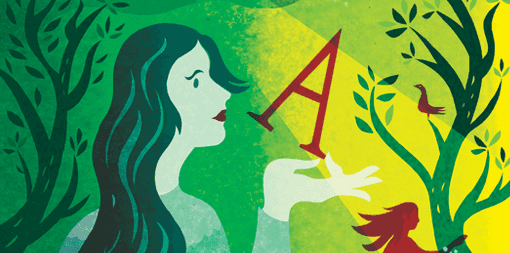
However, that doesn't mean I liked all of the characters. I mainly liked Hester and her great willpower to stay strong when everyone was against her. Arthur Dimmesdale was okay, and I obviously disliked Roger Chillingsworth, seeing as he was the antagonist of the novel and always caused trouble for Hester. And then there's Pearl. Those of us in The Scarlet Letter reading group refer to her as "the devil child". She comes into the story as this strange little girl who grew up alone in exile with her mother and seems to find joy in her mother's anguish. Pearl has a sense of pride in the fact that she is the child of the woman with the embroidered scarlet letter on her gown, and she is therefore convinced that she is special compared to the other children in her community. She also acts very wild and appears as more of a rebellious little girl. When around other children, she acts tough and harshly, never having the opportunity to make friends or establish bonds with others. This is most likely due to the fact that she has lived in isolation with only her mother, but I still dislike her attitude and actions throughout the book. She knows that the scarlet letter is emotionally painful to her mother, yet she does whatever she can to remind Hester that it is there. The one time in the book that Hester actually takes the letter off, Pearl freaks out and throws a temper tantrum. She simply won't accept the fact that her mother took it off. Her stubbornness forces Hester to cave in and put it back on and Pearl becomes agreeable again. Okay that was a long rant about Pearl. I just never really grew fond of her character. Let's just say, she annoyed me deeply.
Anyways, The Scarlet Letter is a really good book. It shows a true struggle for redemption and the ability to stay strong. I may not have enjoyed every moment of it, but overall, the story was great. The words were full of meaning and flowed smoothly along. I'm glad to have had the chance to read The Scarlet Letter. It's a story I shall never forget.
Tuesday, February 10, 2015
Taking a Look at Some Older Music (CC)
So, as soon as we started talking about the Heart of Darkness unit in class, I remembered a song that I have grown to love. I would hear and read words like "Congo", "civilization", and "native population", and phrases from the song would keep on replaying in my head. Now, every time I open Heart of Darkness I hear "Bongo bongo bongo, I don't want to leave the Congo, oh no no no no no!". Not many of you probably know of this song, as it's an older one from 1947. It's called "Civilization" and is sung by The Andrews Sisters and Danny Kaye.
The song itself is a humorous satire about a group of "civilized" people who are settling into a native village, trying to convince them that "civilization is a thing for [them] to see". The song is portrayed in the view of the native "savages" and shows that they don't really want to join the "civilized" people. They are happy in the Congo and would rather not change the way they live. Here, take a moment and listen to it if you have the time:
I love this piece, as it's catchy and full of life. The humor embedded within the song makes it even greater. Normally I don't listen to this type of music, but I have to admit, oldies hold a special place in my heart. I love songs like "Dear Laughing Doubters", "Everybody Wants to Rule the World", "Don't Stop Believin'", "Imagine", and so many more. They have a certain feel to them that differs from a lot of the music from the present.
Take, for instance, "The Sound of Music". This movie musical was huge. Produced in 1965, Julie Andrews and the other actors and actresses just made the movie thrive. The music was so warm, so real, that families all over the world fell in love with it. In 2013, "The Sound of Music Live" was performed, with Carrie Underwood as the lead. Although many people enjoyed the production itself, there was a different feel to it than that original movie. There is something sentimental about these old musicals - "The Sound of Music", "Fiddler on the Roof", "Willie Wonka and the Chocolate Factory", "Annie", etc. - that it would be impossible to replace them. Sure, some remakes can be pretty popular. "Charlie and the Chocolate Family" and many "Annie" remakes were very successful. However, the old versions can never be replaced. Both versions can be amazing, but they don't often completely cover up the original. Imagine if someone decided to film a new "Wizard of Oz". It would be extremely difficult for people to forget the heart-felt voice of Judy Garland in this well-known classic. We can try to recreate works of art in a different light, but we can't replace them, nor can we replicate them in all of their beauty.
Okay, so this conversation may have drifted away from the Congo on a long chain of thoughts, but the overall point is, the music of the past should never be forgotten. It is part of what has allowed music to evolve as far as it has now. Music is always changing, rearranging, becoming something more than it was before. That's what makes every song a piece of art - expressive and unique in its own distinct way.
The song itself is a humorous satire about a group of "civilized" people who are settling into a native village, trying to convince them that "civilization is a thing for [them] to see". The song is portrayed in the view of the native "savages" and shows that they don't really want to join the "civilized" people. They are happy in the Congo and would rather not change the way they live. Here, take a moment and listen to it if you have the time:
I love this piece, as it's catchy and full of life. The humor embedded within the song makes it even greater. Normally I don't listen to this type of music, but I have to admit, oldies hold a special place in my heart. I love songs like "Dear Laughing Doubters", "Everybody Wants to Rule the World", "Don't Stop Believin'", "Imagine", and so many more. They have a certain feel to them that differs from a lot of the music from the present.
Take, for instance, "The Sound of Music". This movie musical was huge. Produced in 1965, Julie Andrews and the other actors and actresses just made the movie thrive. The music was so warm, so real, that families all over the world fell in love with it. In 2013, "The Sound of Music Live" was performed, with Carrie Underwood as the lead. Although many people enjoyed the production itself, there was a different feel to it than that original movie. There is something sentimental about these old musicals - "The Sound of Music", "Fiddler on the Roof", "Willie Wonka and the Chocolate Factory", "Annie", etc. - that it would be impossible to replace them. Sure, some remakes can be pretty popular. "Charlie and the Chocolate Family" and many "Annie" remakes were very successful. However, the old versions can never be replaced. Both versions can be amazing, but they don't often completely cover up the original. Imagine if someone decided to film a new "Wizard of Oz". It would be extremely difficult for people to forget the heart-felt voice of Judy Garland in this well-known classic. We can try to recreate works of art in a different light, but we can't replace them, nor can we replicate them in all of their beauty.
Okay, so this conversation may have drifted away from the Congo on a long chain of thoughts, but the overall point is, the music of the past should never be forgotten. It is part of what has allowed music to evolve as far as it has now. Music is always changing, rearranging, becoming something more than it was before. That's what makes every song a piece of art - expressive and unique in its own distinct way.
Monday, February 2, 2015
Our Hobbies Define Us (FW)

Today I found out that I got into this thing called the MSVMA All-State Honors choir for the second time. It's the third stage of a yearly high school choir competition that takes a really long time to explain, so I'll skip the explanation and just say that the All-State level is a choir of around 120 of the most talented singers in the state. This is something that I honestly freak out about. I love having the challenge to memorize five new songs in like a month, including those tiny (yet not so tiny) details like exact timing, pronunciation (for the foreign pieces), and interpretation. The notes are the easy part. It's challenging, yes, but I love every minute of it. The point is, I am super thrilled about this (more than you can even imagine) while whoever is reading this is probably thinking something along the lines of "Who in the world takes on extra work like that and finds things like memorizing music fun and entertaining?". And we come to the point of my blog post: Our hobbies define us.
This is something I've always found intriguing. How is it that one person can excel at one thing and then totally fail at another. I guess it's because we hone our skills in one main area or a few, and then the rest of our abilities in life kind of waver. Some people enjoy sports and invest all of their time into them, others cannot even understand how they work. Some people are brilliant at playing piano, others have issues distinguishing the names of the keys. It all depends what your talents are and how much you enjoy doing those things. I find that a lot of times, what you are talented at becomes what you love to do.
Of course, capability is another thing. I love to perform in musicals. I've got the acting and singing down, but the dancing part - that's another story (Ha! I am truly terrible at dancing). It's not that I don't want to dance - in fact I wish I could dance with the gracefulness of an actual dancer. No, the fact is that I might just not be capable of dancing in the first place. Sure, I can block out a few simple moves like the grapevine or the box step, but I don't think I will ever be able to dance easily like a dancer could. It's just not one of my strong points. Still, that doesn't stop me from trying. We all try at certain points in our lives to do things that we may not be at all good at. Sometimes we do so as a simple joke, other times because we actually want to get better at that specific task. And, as long as we have the potential for growth and are willing to work hard enough, we can, indeed, improve our abilities for that particular skill. If we don't have the capability to grow in that skill, however, improving can be nearly impossible.
So, in the long run, we tend to stick with what we are good at, or with what we love to do. I love the fact that everyone is unique. We all come from different backgrounds and love to do different things. Sometimes that individuality brings us together, showing that people who like to do completely different things can still find joy in hanging out with each other. This works the other way too, of course. People with the same hobbies can be brought together in a special way as well - a bonding between individuals who all share the same or a similar hobby.
Either way, having a hobby is good for us. It defines us for who we are. If I didn't sing all the time, I would be a very different person. In fact, it scares me as to how different my entire life would be. Seriously, imagine your own life without one of your greatest talents. How strange would your life have been? One simple difference can change the entire make-up of your very being. Quite terrifying, right? Well, I'm glad that we are who we are. Everyone has their own strengths, their own weaknesses, and their own lifestyles. It's part of what makes us human. A hobby is something we find joy in - something we can honestly say has changed our life for the better - something that gives us true meaning.
Monday, January 26, 2015
My First Look into *The Scarlet Letter* (IR)

For the third independent reading book of the year, I find myself reading none other than The Scarlet Letter. I have always been quite a bit curious about this book, as I know others in my family who have read it and found it interesting. It's about a woman named Hester Prynne who gets punished by the Puritan community for committing the act of adultery. They force her to wear a scarlet letter "A" - hence the title - on her gown in order to plant a seed of guilt into her body and mind that will stick with her forever, never allowing her to forget this deed that she has done.
The story has unfolded into a variety of interesting characters - Roger Chillingworth, Mr. Dimmesdale, and especially Hester's growing daughter - Pearl. Pearl is a key character, as her development in life reflects off of her mother's, as well as establishes her being as a living reminder of Hester's infamous crime. The members of the Puritan community scorn Hester for what she has done - even the children despise her - but to make matters worse, their hatred spreads all the way to Hester's innocent child, who in turn, toughens herself up from all of the ridicule. The story follows the mother and daughter through their struggle to live in a world that has been hardened to forgiveness.
The Scarlet Letter really causes you to sympathize with the protagonist. Hester's punishment makes her seem so lonely and isolated from the rest of her community, and I would never wish that on anybody. Everyone makes mistakes, some worse than others, but is it really fair to completely disown them? Okay, so I may be one of those optimistic people who believes in second chances. I know that in certain cases a second chance isn't really a good idea, but still, should we punish harshly, or learn to forgive the grave sins of others and move on to a brighter future, allowing them to learn from those past mistakes? I guess this is one of those books that really makes you think!
Although I wouldn't declare this a favorite book, I am enjoying the story line quite a bit. It's interesting to follow this little duo of characters along on their journey for redemption. The writing style can be a little bit wordy in some spots, but I'm not complaining. Compared to the thick stream-of-consciousness style of my first independent reading book - The Sound and The Fury by William Faulkner - this novel is very well written. I find myself wanting to read more and more to see what events may ensue. Well, I shall be looking much further into The Scarlet Letter. Until the next time! :)
Monday, January 5, 2015
A Look at "If" by E.E. Cummings (PR)
If
The first time I read this poem, I really liked it. The structure, the rhyme scheme, and especially the overall meaning - they all stood out to me as very well balanced. I interpreted the piece as a statement by Cummings that all of the pain and struggles that we, as humans, go through each and every day of our lives are what define us. How we deal with those obstacles makes us who we are. It is very widely known that we learn through our mistakes, analyzing what we have done wrong or could have done better, and adjusting ourselves to grow in our capabilities. Cummings uses phrases like, "earth was heaven" and "tears were glee" to describe a world of perfection in terms of all things being good and beautiful. However, he shows through words like "despair", "suspense", and "sad plight" that a world where all of these ideas are opposite would be corrupted, as no one would be the person they were meant to be. Life wouldn't play out the same if we never struggled. All of those times we wake up dreading the day to come only make us stronger once we get through it all. If everything was mixed around and those struggles weren't really struggles, life would become like a failed attempt at a utopia, as we would never really grow, never strengthen our minds and hearts for the reality of life. By living in a world with sadness and deceit, we enable ourselves to become distinct individuals - individuals who have lived unique lives which define us through our experiences. We have good days and bad days, but without the bad ones, how would we truly appreciate the good? If every day was sunny, wouldn't we miss the rain? Life is comprised of not only good things, but bad things as well. It helps to maintain a sort of balance (just like the poem) - building us up with all sorts of experiences while challenging us to try our best in life to succeed in whatever it is our hearts desire.
The first time I read this poem, I really liked it. The structure, the rhyme scheme, and especially the overall meaning - they all stood out to me as very well balanced. I interpreted the piece as a statement by Cummings that all of the pain and struggles that we, as humans, go through each and every day of our lives are what define us. How we deal with those obstacles makes us who we are. It is very widely known that we learn through our mistakes, analyzing what we have done wrong or could have done better, and adjusting ourselves to grow in our capabilities. Cummings uses phrases like, "earth was heaven" and "tears were glee" to describe a world of perfection in terms of all things being good and beautiful. However, he shows through words like "despair", "suspense", and "sad plight" that a world where all of these ideas are opposite would be corrupted, as no one would be the person they were meant to be. Life wouldn't play out the same if we never struggled. All of those times we wake up dreading the day to come only make us stronger once we get through it all. If everything was mixed around and those struggles weren't really struggles, life would become like a failed attempt at a utopia, as we would never really grow, never strengthen our minds and hearts for the reality of life. By living in a world with sadness and deceit, we enable ourselves to become distinct individuals - individuals who have lived unique lives which define us through our experiences. We have good days and bad days, but without the bad ones, how would we truly appreciate the good? If every day was sunny, wouldn't we miss the rain? Life is comprised of not only good things, but bad things as well. It helps to maintain a sort of balance (just like the poem) - building us up with all sorts of experiences while challenging us to try our best in life to succeed in whatever it is our hearts desire.
So, that's how I interpreted the poem. It could have a different meaning for different people, but this is what makes the most sense to me. The dynamics of the poem were all important - each individual element. The three six-line stanzas, the listing of opposites, and the final line of each stanza. They all contribute to the balance of the poem, as well as its meaning. I truly loved the structure of Cummings' piece. By tying everything together within the poem, he made the words and meaning sink in much more effectively than they could have if written any differently. I love reading well-balanced poems such as these. They make everything tie together and simply make so much more sense. Until the next poem. :)
Monday, December 1, 2014
My View on Tragedies (CC)
I've always found tragedies fairly interesting. Terrible things happening to all sorts of people and almost always resulting in death. Interesting, yes, but at the same time, very depressing. I understand that tragedies are a part of the world of literature and not every story has a happy ending, but I'm not entirely sure how exactly I feel about them as a whole. I find them interesting, as I said before, but does that mean I like them? I really don't know.
What I do know, however, is that I tend to hate depressing endings. It all started the summer of fifth grade. I read this book about a sled dog (the protagonist of the story). I can't remember the title, but what I remember vividly is that at one point in the novel, this dog had befriended a kind man who he accepted as his master, along with that man's friends and the other sled dogs who he grew close to as his companions. One day, they were out in the woods camping (I can't remember why) and the main sled dog left the group because he heard a call from a wild dog or wolf or something. You see, he was fighting between the pull of loyalty toward his master, his master's friends, and the other dogs, and the call of the wild - leaving them all behind and becoming wild. He decided he loved his companions too much to leave them, so he ran back to the group the next day and, well, everyone had been killed by traveling huntsmen. The ending of the story was so abrupt that I just couldn't deal with it. the book had been so good up until that point. At the end of the novel, rather than the hero dying (as in most tragedies), everyone but the main character had died. Imagine that - everyone you love just suddenly disappearing off the face of the earth. In all honesty, I believe that would be worse than death.
And so, I had been introduced to the world of tragedies. I've seen a lot of tragedies throughout the years, and some have actually been quite good. However, I just can't stand any of the endings. Death, death and more death - almost every time. I think my problem is that I just get way too attached to the characters that I can't stand watching them struggle through the terrors of their lives. Antigone, Eponine, Fantine, Hassan, many of the characters within the Hunger Games Trilogy and Harry Potter and the Deathly Hallows. There are so many tragic deaths to characters that are so well developed and loved by the audience that it almost makes me hate tragedies.
At the same time, tragedies are necessary to our existence. They keep us sane and out of the crazy mind-set that every little thing in the world will end in a "happily ever after", as Disney movies clearly express (No offense to Disney movies, which I love). Tragedies can be depressing and frustrating and altogether outrageous at times, but isn't that the point? Wasn't the author intending to get that specific reaction from the audience? It's like when an artist paints a portrait of a horrifying face. They specifically intend to invoke a reaction in their viewers. Sad songs can make us want to cry if performed good enough, but that doesn't mean we hate them. In fact, songs that bring us to tears can make us love them even more. And aren't tragedies the same?
So, I may not love tragedies, but I do not hate them. I respect them for what they are and the reaction they obtain from the readers. Although some may make me cry, I acknowledge the author for developing the characters in such a way that I am disturbed by their deaths. Tragedies are tragedies, but they are not the only kind of story in the world. There's all sorts of happy endings out there, it just depends which kind of story you feel like reading. :)
What I do know, however, is that I tend to hate depressing endings. It all started the summer of fifth grade. I read this book about a sled dog (the protagonist of the story). I can't remember the title, but what I remember vividly is that at one point in the novel, this dog had befriended a kind man who he accepted as his master, along with that man's friends and the other sled dogs who he grew close to as his companions. One day, they were out in the woods camping (I can't remember why) and the main sled dog left the group because he heard a call from a wild dog or wolf or something. You see, he was fighting between the pull of loyalty toward his master, his master's friends, and the other dogs, and the call of the wild - leaving them all behind and becoming wild. He decided he loved his companions too much to leave them, so he ran back to the group the next day and, well, everyone had been killed by traveling huntsmen. The ending of the story was so abrupt that I just couldn't deal with it. the book had been so good up until that point. At the end of the novel, rather than the hero dying (as in most tragedies), everyone but the main character had died. Imagine that - everyone you love just suddenly disappearing off the face of the earth. In all honesty, I believe that would be worse than death.
And so, I had been introduced to the world of tragedies. I've seen a lot of tragedies throughout the years, and some have actually been quite good. However, I just can't stand any of the endings. Death, death and more death - almost every time. I think my problem is that I just get way too attached to the characters that I can't stand watching them struggle through the terrors of their lives. Antigone, Eponine, Fantine, Hassan, many of the characters within the Hunger Games Trilogy and Harry Potter and the Deathly Hallows. There are so many tragic deaths to characters that are so well developed and loved by the audience that it almost makes me hate tragedies.
At the same time, tragedies are necessary to our existence. They keep us sane and out of the crazy mind-set that every little thing in the world will end in a "happily ever after", as Disney movies clearly express (No offense to Disney movies, which I love). Tragedies can be depressing and frustrating and altogether outrageous at times, but isn't that the point? Wasn't the author intending to get that specific reaction from the audience? It's like when an artist paints a portrait of a horrifying face. They specifically intend to invoke a reaction in their viewers. Sad songs can make us want to cry if performed good enough, but that doesn't mean we hate them. In fact, songs that bring us to tears can make us love them even more. And aren't tragedies the same?
So, I may not love tragedies, but I do not hate them. I respect them for what they are and the reaction they obtain from the readers. Although some may make me cry, I acknowledge the author for developing the characters in such a way that I am disturbed by their deaths. Tragedies are tragedies, but they are not the only kind of story in the world. There's all sorts of happy endings out there, it just depends which kind of story you feel like reading. :)
Subscribe to:
Posts (Atom)