Monday, October 27, 2014

The Amazing Existence of Poetry (CC)

       Sadly, we have come to the final days of the poetry unit in AP Lit. I didn't enjoy everything we did in the unit, nor did I enjoy every single poem we analyzed, but overall, I really liked learning more about poetry. Poetry has always been one of those things that just stuck with me. I have always loved constructing poetic writing and forming stanzas with very particular rhythms and rhyme schemes. I also see poetry in the everyday music of my life. Choral pieces that are composed merely of a poem someone, somewhere, wrote and has been set to music, song lyrics that are way too easy to memorize because they rhyme and are written exactly like a poem, etc. Poetry is kind of everywhere. Speeches that have a very musical flow to them and cause them to be portrayed effectively, certain plays and especially musicals (Anyone heard of Seussical the Musical?), songs being composed with words, and so much more. It is an art of life that would be difficult to live without. I mean, if we lost poetry, the world would - by no means - suddenly end, but it would be a darker, drearier place. 
        Poetry brings out that creative side of a lot of people, allowing them to express themselves through a complex (or simple) structure of words. If we had no poetry, a lot of people would suffer. Prose writing would vanish, tearing out the hearts of writers everywhere, as it is such a beloved form of writing to so many people. Music would lose a lot of choral pieces. A lot. Speeches with a very poetic form - like "I Have a Dream" by Martin Luther King Jr. - would lose much of their effectiveness due to their loss of flowing rhythm and structure. Like I said before, a world without poetry would not be nearly as exciting and well-off. 
        Poetry adds so much to the world. It gives us a piece of life that helps us transform into more creative thinkers and build up our character, making us more well-rounded people overall. Of course, some people hate poetry or at least certain elements of poetry, and that's fine. It isn't something everyone has to like. Personally, I like poems with a very musical or flowing feel to them. I hate poems that are intricate and so filled with complex symbolism that I can't tell one word from the other. In all honesty, a LOT of poems are like that. But every once in a while, you get a nice, simple, and down-to-earth piece of poetry that just lifts your soul. You know what what I mean? After all, poems are usually created for the audience - whether that be to prove a point, or to simply evoke an experience in the readers themselves. 
         Poems are used for enjoyment, for learning, for gaining techniques like memorization and applying those techniques to other elements in life, for writing, for music, to prove points, and to boost people's everyday moral. In my opinion, poetry has thoroughly embedded itself into the everyday life of people worldwide. Poetry is something in life that just clicks, and it will grow even larger before you know it!

Sunday, October 5, 2014

The Theory of Hope (CC)

        For the poetry project in class, I'm analyzing "Hope is the Thing With Feathers" by Emily Dickinson - a poem that speaks out about the value of hope through many layers of symbolism and metaphors. Yes, I understand the collective frustration with Dickinson from our discussions in class and agree that most of her poetry is just too complicated - or in some senses way too simplistic. However, that doesn't mean I hate all of her poetry. In fact, I love some of the poems she wrote throughout her lifetime. Everyone has good works and some not-so-good works - it all depends on which the viewer is reading and their own personal opinion on the matter. So, I know I like at least one of Emily Dickinson's poems, and that's that.
        So, since I've been looking at this poem and researching it both at class and at home, I can't help thinking about hope. Just how important is hope, anyway? It seems like sometimes hope is all people have in life - it leads them through their darkest hours and guides them to better days. Everyone therefore has at least some sense of hope. Even those people who think that talking about hope is "too cheesy" or "lame" have their own personal hopes and wishes - it's something internal that we can't really shut off. Hope is pretty important then, wouldn't you say?
        Think of it like this: What if hope didn't exist? What would the world be like? All I know is that it would not be good. People would lose all of their ambition, all of their determination to find their dreams, because their hope would be replaced with despair. Everything that could have been accomplished would seem out of reach and impossible. No one would take the "leaps of faith" that they do today. Without taking chances, people never grow. It's something we just have to do. If we can't hope, we can't achieve those crazy goals we establish. Hope is what makes growth possible - it's what allows us to keep on pushing ourselves forward in life and refusing to give up. In a way, hope is what keeps us sane.
        So, this may just seem like a happy-go-lucky post about the value of faith in one's life, but hope really is an incredibly important part of the world. Hope and the will to live are tied together. They go hand in hand - if you lose one, you lose the other. Without hope we have nothing to live for - the will to live is something only reached through the power of hope. How does a young adult leave home and move towards the future? Hope. How does someone with an emotional disorder keep on going in life? Hope. How does a bird learn how to fly? Hope. It's something that just sticks with us through all of our days. Hope allows us to keep on trying, keep on racing towards new and brighter horizons. It's what makes us dreamers, and what gives us determination. Hope, faith, believing in even the most unrealistic dreams - it gives us something to ground us in this world - something to live for.


Sunday, September 28, 2014

My Reflection on *The Sound and the Fury* (IR)


        So, I recently finished reading The Sound and the Fury by William Faulkner. I will now write about all of my thoughts on this very unique text.
        Let me just say, reading through pure stream-of-consciousness writing is a very, very, very hard thing to do. The first passage of four is written entirely in it. The second passage is still mostly stream-of-consciousness with a few sensible pieces, the third even less confusing, with the final passage leaving out stream-of-consciousness writing all together. In a way, the reader gets the hardest part out of the way first - quite a relief. I have to say, though, I honestly don't think I've read anything as confusing as this book in my life. The way the stories read in choppy sentences or fragments, and the way the scenes jump around so much - even through different times. Yes, I'm sure you have all experienced time gaps in books but for the most part, it is easy to see when your character is in a different time period - a few months have passed, years, whatever. Well, in The Sound and the Fury, the exact day or year can be impossibly hard to find at parts - especially in the first part of the novel. I was completely confused for the first fifty pages with all of these off-topic things jumping into the text and the character would suddenly be in a different place than before. I then thankfully realized that the character had been having flashbacks with the use of italics. So all I had to do was look for the main story-line in the paragraphs without italics, right? Yeah, I wish it had been that easy. In fact, that was my first thought. Unfortunately, if the flashback was long enough, it would be written without italics, switching the main story-line's view with the flashbacks altogether. Let's just say, it was extremely confusing.
        Not that I have anything against Faulkner's writing style, I just find it hard to read. In fact, I found certain parts of this book (namely part one) harder to interpret than Shakespeare - and that's saying something. It's written in a completely different tone than Shakespeare's writing, of course - much less "formal" - but that does not change the fact that it is truly confusing.
         Although I found most of this story terribly difficult to read there were a few parts I, as the reader could actually understand. Those parts were a relief. There was one section in part two like that, when one of the main characters - Quentin - was trying to help this little girl find her home. The writing for that scene was very straight-forward, unlike a lot of the book itself.
         Okay, I know it's hard to explain just how interesting the writing of this book is. Here's a short passage from part two:

 "A face reproachful an odor of camphor and of tears a voice weeping steadily and softly beyond the twilit door the twilight-colored smell of honeysuckle. Bringing empty trunks down the attic stairs they sounded like coffins French Lick. Found not death at the salt lick" (Faulkner 95).

        That quote is written word for word - I didn't leave anything out or change a thing. Notice the sting of separate thoughts mending together and the mysterious lack of normal punctuation? This is an extreme example - one of Quentin's flash backs. But you get the idea now right? It was by no means an easy read.
        Surprisingly, however, the characters were developed wonderfully - despite the hard-to-interpret writing itself. As readers, we got to know Benjy - the mentally disabled narrator of part one, Quentin,- brother to Benjy as well as Jason, who fights with himself over his feelings towards his sister Caddy as he envelops part two, Jason - the strict leader of part three and hard-headed uncle of Miss Quentin, as well as other important characters. They all have a purpose in the story - each one has a meaning.
        I find it perplexing that a book so very confusing can have such great character development. It's one of the mysterious things I discovered on my adventure reading this novel. Although it's definitely not one of my favorite books (honestly, you will have to bribe me with tickets to a really good musical if you ever want me to read that book again), but I am glad I read it. While it wasn't a particularly fun experience for me, I can now say I have read a book written mostly in stream-of-consciousness. Knowing that may never happen again, I'm glad I was able to explore an area of writing such as this. Though had to interpret, I found the way Faulkner wrote so unique and unlike anything I had ever read before. As we learned at the beginning of the year, originality is hard to find. By reading something unlike anything I have read before, I can start to feel that calm sense of originality. Seeing something so unique is really quite fascinating.
        So there you have it - my experience with The Sound and the Fury. Well, out with the old, and in with the new. Time to read another book, and have a whole new adventure.

Tuesday, September 9, 2014

Actors and their Amazing Capability to Act (IR)

        So, it's been a while since I've blogged about acting. It's one of my many hobbies and I can't help being interested. So, yesterday I auditioned for our school's fall play, "A Haunting We Will Go". I've always absolutely loved auditions for plays and musicals because you get to read the lines for all sorts of characters so that the directors have a good idea of your capability to act. So, in all of the plays I've been in, I've ended up being cast as the innocent and good character. Since people have only seen me act in those happy-go-lucky roles, no one has ever really seen me act in a villainous role. Of course, I'm not saying I would be a good fit for a villainous role (Ha! During the auditions for "The Wizard of Oz" in  10th grade they had me read for the witch at on point... It was quite an interesting experience), just that it is possible for even me to act villainous in certain roles.
         The point is, this got me thinking about just how amazing true actors can really be. I mean think about it - some actors can play the most pure, innocent characters as well as the most evil, lunatic and annoying characters. It all depends on perspective. I found this article online called "13 Actors Who Can Play Any Role". It has a list of some actors and actresses who do indeed have a huge range of acting experience - actors such as Natalie Portman, Johnny Depp (I don't see how he couldn't be on this list), Leonardo DiCaprio, Brad Pitt, Tom Hanks, and many more. Of course, these are only a sliver of the amazing actors out there. Someone who I personally would add to this list is Anne Hathaway. From a humble daughter in Ella Enchanted, to a troubled mother (with a powerful voice) in Les Miserables, to a full-on villain in The Dark Night Rises, Anne Hathaway can play a huge variety of roles, performing each part with a certain air that is unique to her and her alone. Some actors truly have an amazing capability to act. And that is something that I admire greatly in them.
        Actors and actresses also tend to have a knack for memorizing lines. This is something that intrigues me immensely about acting. When your director hands you a 200-page packet script for a play that you decide you will learn in a week, some may think it impossible, and so may you. That is until you sit down for hours on end and come back a week later fully prepared to put down your script and start spouting lines ("Wizard of Oz" anyone?). Memorization abilities just come to people in a real variety of ways. Some people can literally look at a paragraph for fifteen minutes and then exclaim the words flawlessly a moment later.
        By the way, I've also been reading into my most recent unit of AP Psychology quite a bit, so I may start ranting about memorization from here on out. You see, there are all sorts of ways to memorize things, and people just have to find what's right for them. Personally, I am a true visual learner. I memorize lines in plays and such by looking at a phrase, covering it, and repeating the phrase aloud (or in my head if there are people around). Then, I read the next phrase, cover it along with the first phrase, and recite both phrases until it comes naturally. I then continue to repeat this process over and over again throughout whatever it is I am memorizing until I can say it all correctly and in the right order. This is why I absolutely hate it when I am talking to another actor in a play and they change the words around so that it is not exactly as it is written. Normally, a mistake like this will pass off as nothing, but sometimes it doesn't work out so well. Like in "Seussical the Musical", a musical that is made up entirely of rhymes. Once when I was performing in this play, another actor said their lines too quickly, before I could finish my own, therefore causing the rhyme scheme to fluctuate, announcing quite brightly to the audience that there had been a mistake. Yeah, I don't like it when people stray from the script.
        Not all actors are visual actors. A lot of them are audio learners. One time, one of my friends who is into acting was in a play with me outside of school. She was having trouble memorizing lines so I decided to help her. Long story short, we discovered that she was by no means a visual learner, but an audio learner. She was able to learn her lines by following my method of phrasing memorization, except with me reading each phrase aloud to her and then having her recite the lines until flawless. Once you find your ideal method of memorization, the hardest lines to memorize can become possible again.
        So, the point of the matter is, actors have an amazing capability to act. Whether they be a well-known professional or a down-to-earth newbie, acting sure takes a lot of hard work and confidence to express yourself openly to the world. And it looks like my long rant has come to an end. Until the next time! ;)

Here is the link to "13 Actors Who Can Play Any Role":

http://screen.answers.com/movies/13-actors-who-can-play-any-role

Monday, September 1, 2014

The Rising Age of Technology (FW)

        To start things off, I just got a new computer. My old computer unfortunately stopped working in the spring very suddenly and I knew it was time for me to get a new one. However, I survived the summer need for internet with an iPad mini (which I used to read one of my summer reading books online as an eBook rather than reading it from the library, as it was more convenient, although reading books online really hurts your eyes...) and the use of my mom's work computer that she has at the house during the summer. Without either of those things, I would have had issues with completing my summer homework as well as staying in the loop of all of the things going on within my email account - rehearsals, festivals, contacting coworkers, etc. Good thing I had some way to connect to the internet before I got my new computer, right?
        Well, this got me thinking - our lives are becoming so dependent on technology nowadays, aren't they? I mean, think about it. For instance, take a look at schools. Every year schools become more and more reliant on online papers and work. It's easier to keep track of and there's a much lower risk of losing an important paper of some sort. At Black River we use email, Google docs, online videos for certain lessons, and so much more. Even at this very moment, I'm using technology to do my homework blogging. And that's not half of it. Some schools actually distribute laptops or iPads to their students for all of their work throughout the year. It really does make things easier - not having to write out essay after essay, easy storage, being able to share work as well as save important documents from getting lost, and much more.
        Even things like the news are more often watched or read from TVs or computers rather than the newspaper itself. Hordes of people do their shopping and banking online, not to mention social websites like Facebook and Twitter. Computers, tablets, phones, TVs - you name it. These things are a huge part of our lives whether we acknowledge it or not.
        This leads me to the question of the future world of technology. If these things are such a huge part of our daily lives already, what will happen once even newer technology is created? This is a growing, changing world and it advances from one minute to the next. In the past, technology was not nearly as big of a concern. People hand wrote letters instead of using email accounts, gathered together in place of Skype, and got to know each other in person rather than online. I'm not saying that this means technology is a bad thing, I'm just saying that it's a big change. It has its pros and cons. While using this much technology is super efficient and helpful, does it take away from our common life experiences? It's up to you to decide. Everyone has different priorities in life, so there's no right or wrong answer.
        Technology. It's quite a big concept, isn't it? A world of unimaginable openness to new ideas and designs. People are always creating, always thinking up new ideas for the electronic world. It allows our society to keep on advancing and adapting to new ways of doing things. Though it can sometimes frustrate us (like when the internet connection to your computer just won't seem to fix itself), technology really does help us accomplish our daily goals. Without it, the world would not be as complex as it has become. I'm not entirely sure if that's a good thing or a bad thing, but what I do know is that technology has helped us come a long way - for better or for worse.

Monday, August 25, 2014

The Life of a Taxi Driver - CC Post

        After reading the "Interpreter of Maladies" short story, I couldn't help but wonder what it's like to drive around all day listening to other people's conversations. I mean, really. Taxi drivers, chauffeurs, bus drivers - you name it. The drivers of public and private vehicles must meet some intersting people from time to time. Like in "Interpreter of Maladies" when Mr. Kapasi observes the personalities and behaviors of the family he is escorting, taxi drivers and so on must do the same thing. Sure, they can turn on music and separate themselves from the people behind them with a panel of some sort, but at the same time, who can help but wonder about the lives of the people they drive around? If I was a taxi driver, I would be immensely curious about the people I met. With nothing to do but drive and listen to the conversations taking place behind you, it just makes sense that your mind would wander off trying to imagine the lives of these people given the information you pull from their conversations.
        It's like when you're standing in line next to someone who is talking on their cell phone. You hear little bits and pieces of their conversation and your mind automatically attempts to fit the pieces of the puzzle together and come up with an explanation that fills in the holes of their story. Sometimes, our imaginations run wild. Our brains are hard-wired into trying to resolve any hole-filled scenario. That's why we hate cliff-hangers - we just need to know what happens otherwise we don't feel complete. Therefore, when hearing bits and pieces of a person's conversation, we want to fill in those missing holes.
        Mr. Kapasi did just this within his story. He took in the faces, the words, the actions, and the moods of the family riding in his car, and he made estimated guesses of what their lives encompassed. Although his imagination may have taken things slightly too far, he was intrigued by the family beside him and with the reflection of his many unspoken thoughts, he made calculations of what the family would do in the future. I really did enjoy the story! It was fun to think about being on the sideline of the main conversation, interpreting what you hear from person after person for hours on end.
        I find it quite curious as to how taxi or bus drivers interpret the many things they hear. As passengers, we sometimes get lost in our conversations while the driver could easily be getting lost in their own world of thoughts. Intriguing, isn't it? Ha! Well, that's my random babbling of thoughts for the day! I hope you enjoyed it! :)

Wednesday, July 30, 2014

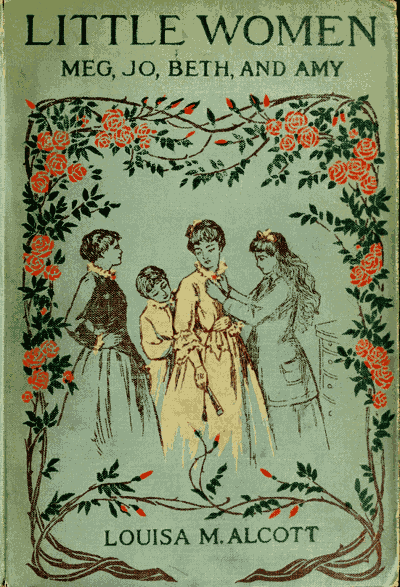
AP Lit Post #7: Now Where Have I Seen Her Before? Little Women Vs. March

        Well, it looks like it's time for one final blog post. Having finished reading both Little Women, by Louisa May Alcott, and March by Geraldine Brooks, I can now see two slightly different interpretations of just who the members of the March family really are. The retelling (March) definitely changed my perception of Little Women. While reading the original, I came to know the March women much more. Namely, I associated Mrs. March as a kind, willful spirit - a mother who always knows how to handle tough situations and keep a cool head. In March, however, she is described as a slightly more "expressive" character, who can sometimes be a tad stubborn and on occasion will break into sudden outbursts when annoyed by someone or something. Mr. March himself is the most changed from his original perspective. In Little Women, though he is not mentioned much, he is viewed as a humble, kind father who leads a life full of high spirits, encouragement, and love. In March however, he is construed as a conflicted man who wants desperately to further the anti-slavery cause. In fact, March appears as a rather weakened man - especially after the incident at the cotton plantation - and wants nothing much to do with his family once it gets down to it. In the last scene of the book, he returns to his home in Concord, MA. You would think he would be ecstatic about seeing his family after so long without them, but no - everything about his children's features remind him of the tragedies he has seen happen to others, and he soaks in his own regret and pain during their entire reunion rather than just rejoicing in the fact that his children are still alive.
        Therefore - as you can probably guess - I appreciated Little Women much more than its retelling. While March focuses on the tragedies of slavery and is indeed interesting, it skews the reader's original perception of March and his family. Rather than seeing the sensible father the March daughters all look up to, we see a man who has trouble controlling his own feelings and can't seem to let go of his past. That was his main problem. Yes, March faced great challenges. Yes, he deserves the ability to morn the past. But that does not give him the right to give up on the future. He had a willing, humble family standing right before him, yet all he could do was wallow in the agonies seen from his eyes. Why remain stuck in the past when you have others who rely on you for guidance? Sometimes we need to let go of our wandering emotions just long enough to help those people who still need our help. I also admire Little Women for the wonderful character development within it. The audience got to know all of the girls one on one, discovering that all of them were unique in their own way. While filled with a few tear-filled moments, the novel was a beautiful piece of writing that showed how a poor family of four daughters was able to form ties of friendship and love that would bond them together forever, even in death. It was heartfelt and very easy to get to know the characters.
        March establishes its own story line through the father of the March family. In Little Women, March is absent for about half of the novel and when he returns, he is not mentioned very much. Therefore, through March, we are able to see just what the father of the March family was doing all of that time. Because of my "curious self" and need for explanation in situations like that, I welcomed March into my hands, thrilled to finally discover the secret life of Mr. March. Now that I have actually read it, I can say that it wasn't perfect, but overall, I rather enjoyed this addition to the original story line. I do believe it has literary merit, as it was created in order to fill in the gaping holes that March left from his absence within Little Women. I appreciated the fact that Brooks took a small hole within one classic plot line and expanded her own ideas into it and allowed the new, run-off story to enrich the feel of the original. Throughout the two books, there are objects and scenes that come together on common ground while at the same time, two completely different stories were being woven together into one. Although both have contrasting flows, I accept them as almost one, unified story line. The events within them explain the gaps that one author or the other left to our imaginations. The story of the four daughters somehow intertwines with the story of the father to form a solid plot line, and that's something that is hard for two completely different authors to do with two very different books.
       I really did enjoy these two books throughout the summer. Each of them is unique in its own way, and their stories flowed along with such interesting events that I just had to keep on reading. I really do love those books - the ones that you can't seem to put down. They just prove that reading is truly a gift in this world, and without it, we would probably be bored out of our minds! Little Women and March were a perfect choice for my reading homework, and I'm so glad  that I decided to try them out. Well, that concludes my blog posts for the summer! To be continued once school starts back up! :)